
SOLUTION · DISTRIBUTED I/O
EBox-RIO Distributed I/O Applications
I/O modules are configured to match the signal types of the equipment on site, collecting the readings and passing them to the supervisory host over Modbus. Commonly deployed in building automation, central air-conditioning control and equipment-room monitoring.
EBox-RIO product line →Capabilities
Applications
APPLICATION · 01 / 04
Central Air-Conditioning Monitoring
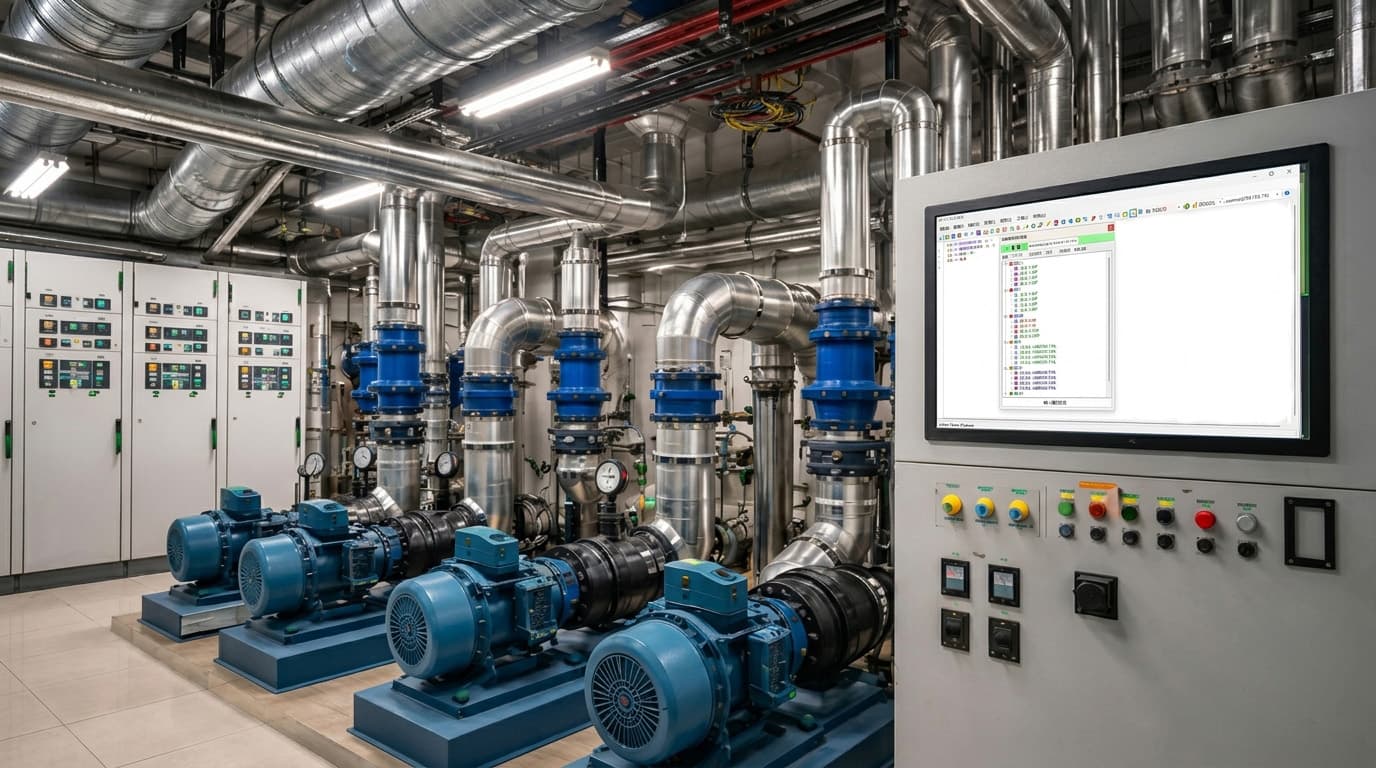
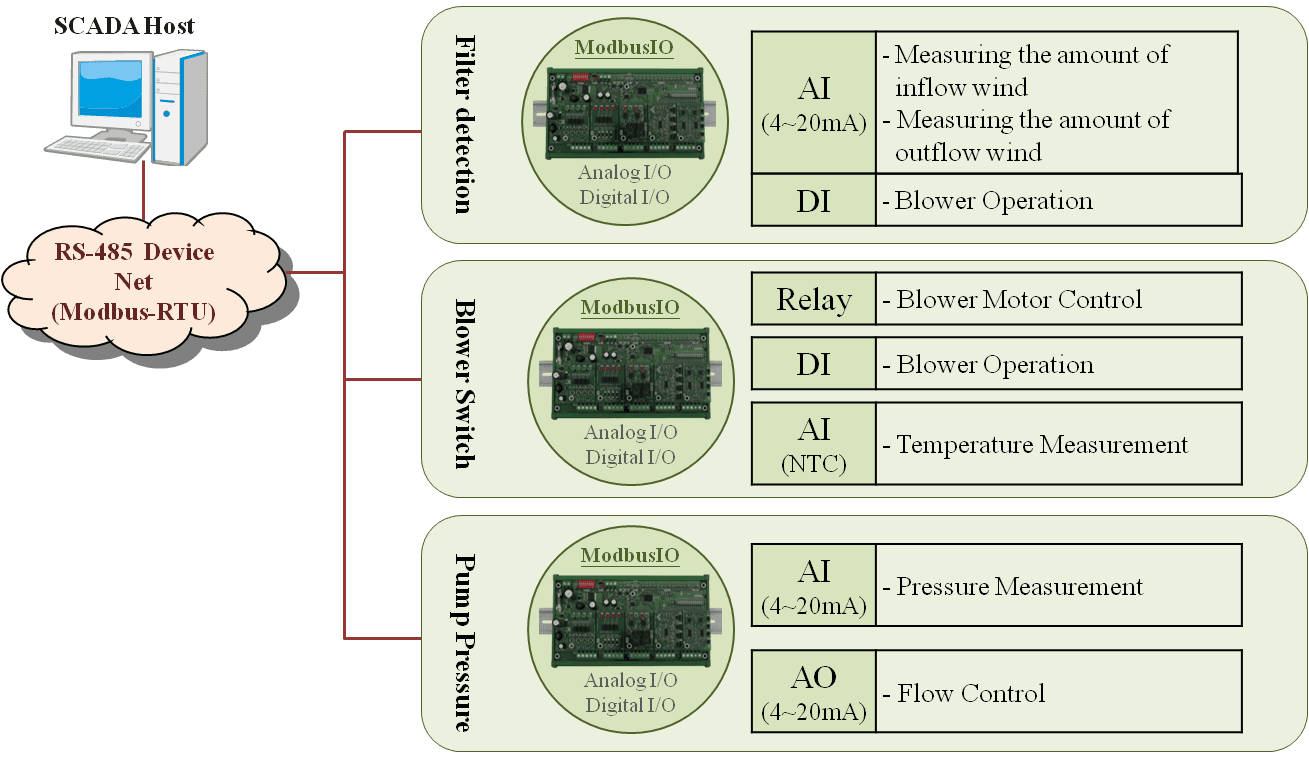
In large air-handling and ventilation installations, the ModbusIO base board of the RIO series and its freely configured I/O modules cover a wide range of terminal equipment — fan damper position, inverter speed, flow switches, supply and return air temperature — and pass the readings to the central host over Modbus.
The on-board DDC function can also act on the collected data directly: modulating supply air volume according to the outlet temperature, for example.
APPLICATION · 02 / 04
Building Automation
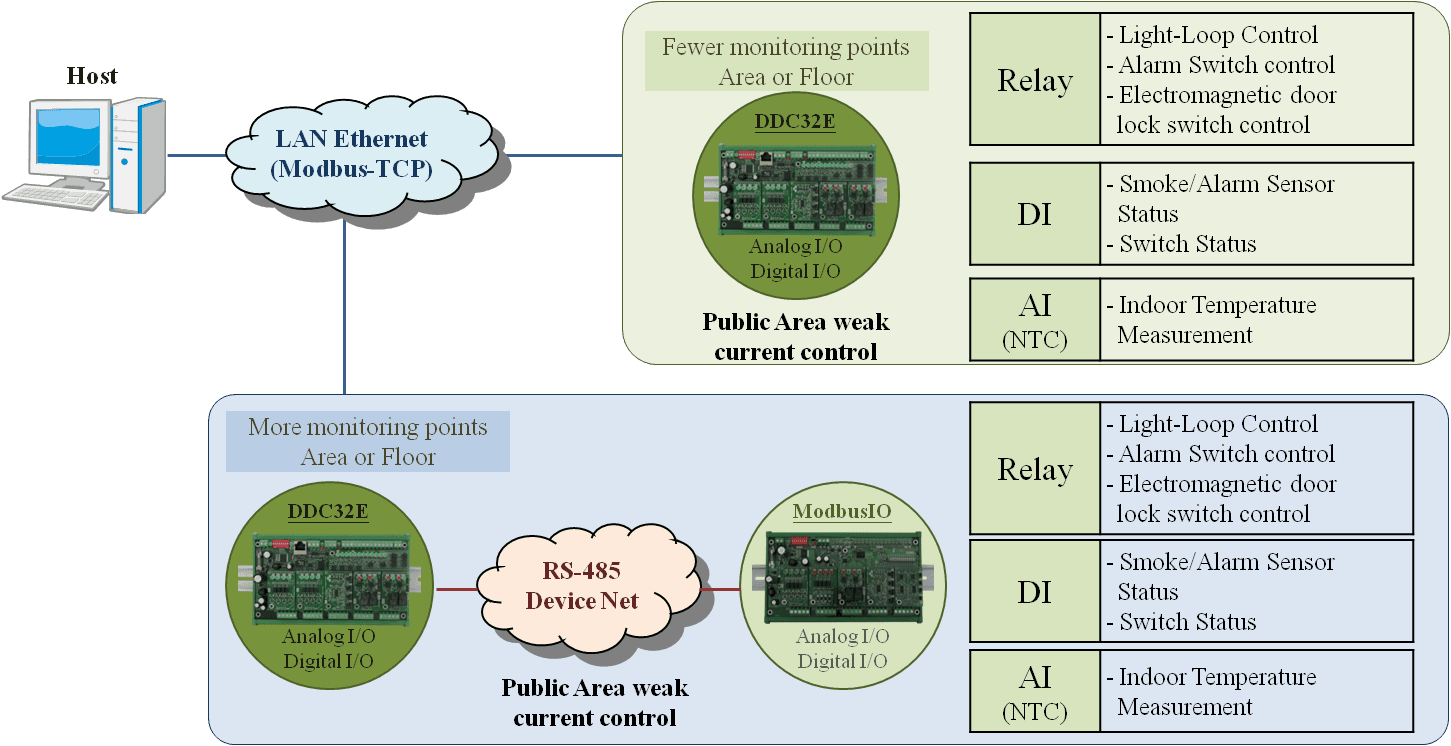
On each floor an LLD-Modbus32E-01 takes in lighting circuits, room temperature measurement, electromagnetic door locks and alarm sensors, sending equipment status in real time over Modbus-TCP so the whole building is managed from one place.
Equipment can be grouped by floor or by office for systematic management.
APPLICATION · 03 / 04
Equipment Room Monitoring
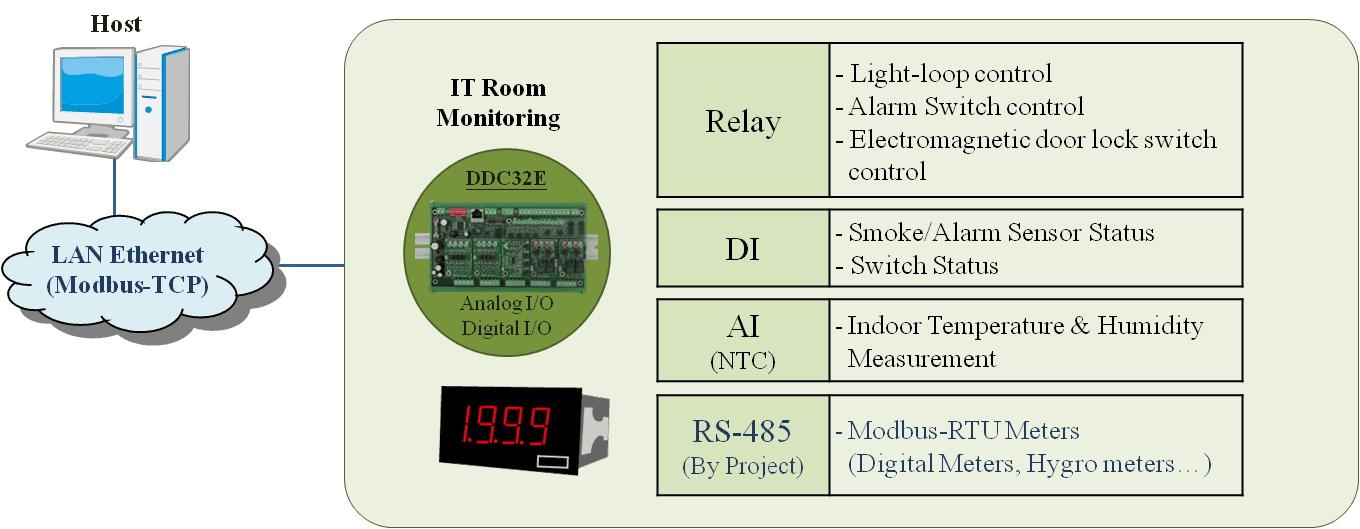
One board covers a machine room: lighting circuits and electromagnetic door locks, smoke and switch status, and room temperature. When power or temperature figures are needed, the unit polls digital meters and ambient thermometers itself, acting as a Modbus master.
APPLICATION · 04 / 04
Direct Digital Control (DDC)
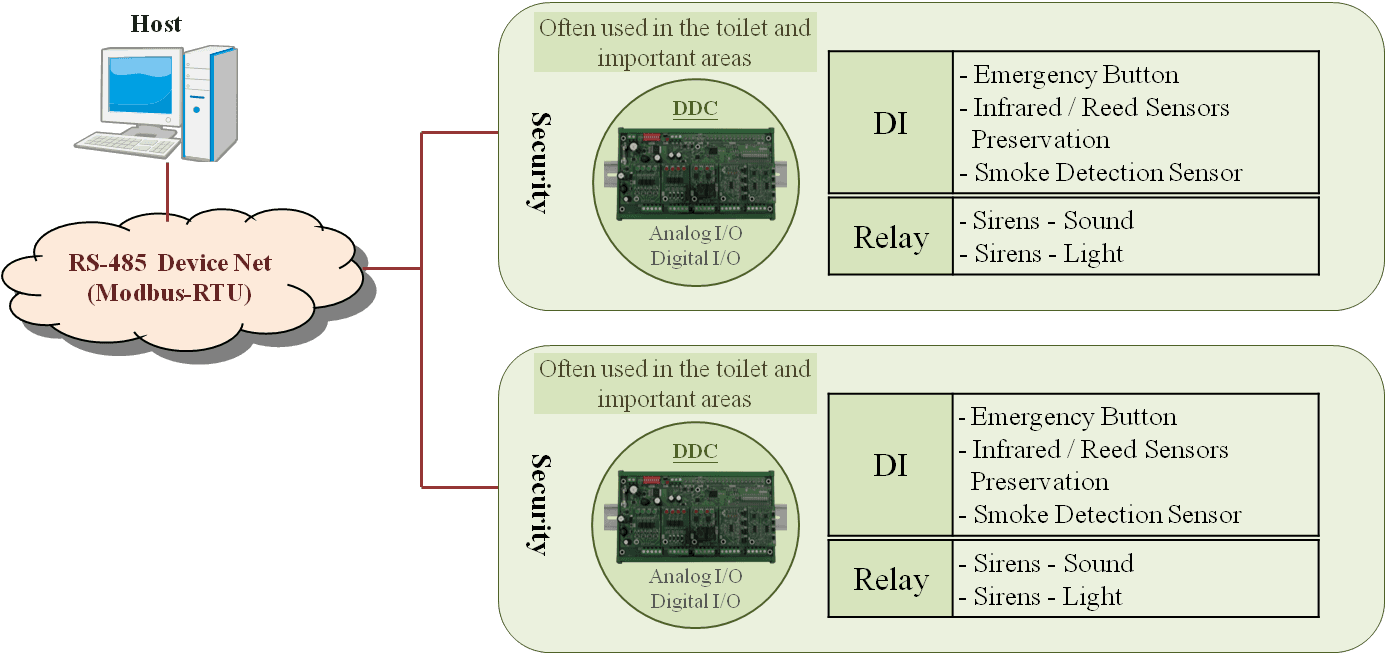
Emergency buttons, infrared and reed security sensors and smoke detectors feed the digital inputs. The DDC program on the module evaluates the trigger and drives the audible-visual alarm through a relay, without waiting on a command from the host.
Outcomes
Flexible configuration
Digital and analog signals each have their own module type — DI, DO, relay, AI and AO combine freely to match the points on site. The modular design also makes warranty service and field replacement easier.
Room for every signal
A single board carries up to 32 control points — enough for a typical floor or machine room without ganging several units together, and one fewer address to manage.
Simple control logic runs on the unit itself, acting directly on I/O point values. Readings can also be converted and pre-processed before upload, so the data reaches the back end in one consistent format.
How It Works
Field sensors, switches and alarm devices wire into the digital and analog I/O of EBox-RIO, and the modules report to the supervisory host over Modbus-RTU on RS-485 or Modbus-TCP on Ethernet. The unit can simply collect through its own I/O modules, or be configured to poll actively, reaching other equipment with a Modbus-RTU interface over RS-485. On the LLD-Modbus32E-01 the two RS-485 ports can take different roles — one configured as a Modbus slave, the other as a Modbus master. Where a decision has to be made on site, LLD-DDC puts the logic on the module itself, so the calculation and the I/O action happen locally without a round trip to the host.
Product Line
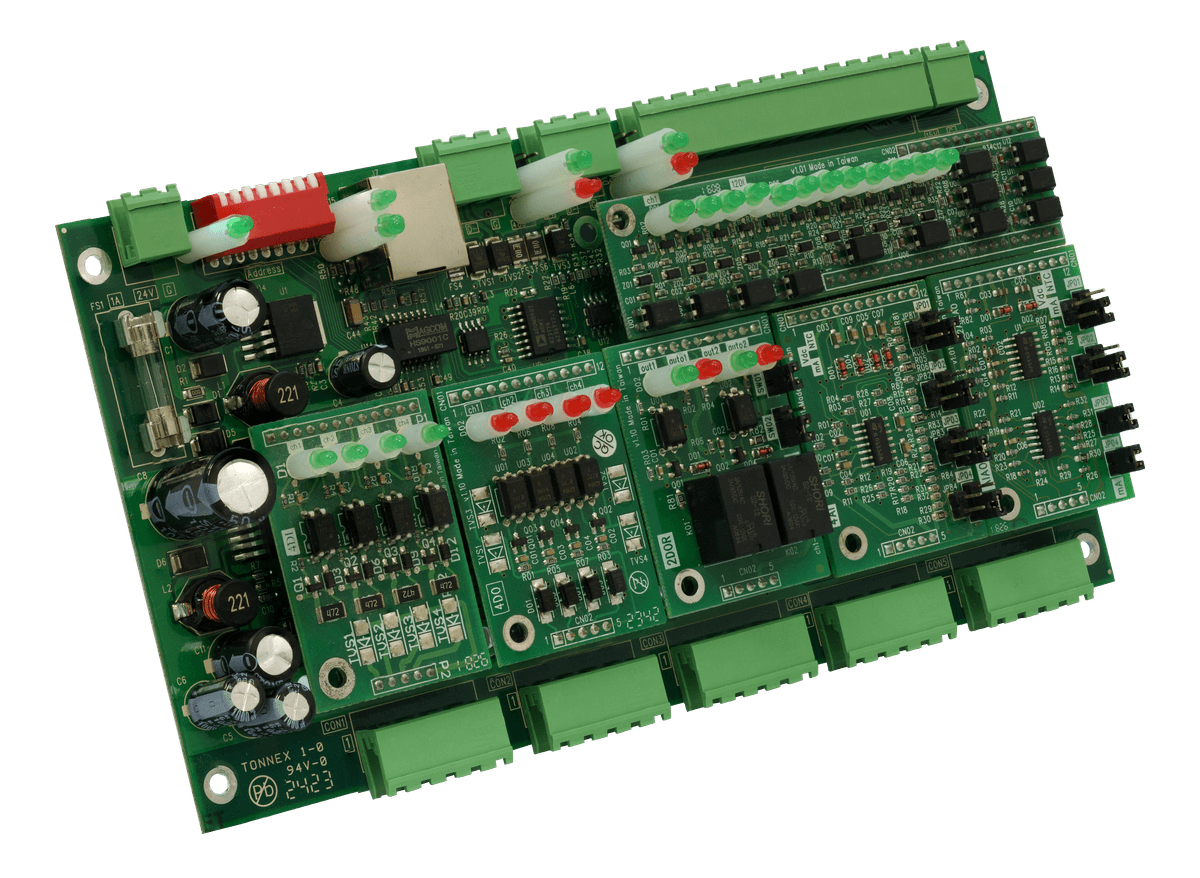
EBox-RIO Remote I/O Module
Push monitoring points out to the field with basic I/O modules — add only what you need
Remote I/O extension
The base board carries five general module slots and one EXT expansion slot, so DI, DO, relay, AI and AO are configured to match the site. It joins existing systems over standard Modbus — for distributed monitoring and customised projects.